IWU-FI Press, September 21, 2026
Berlin, the German capital, held elections on Sunday the 20th, and the Left secured victory. The Die Linke (The Left) alliance, under the leadership of Turkish-German Elif Eralp, secured a decisive victory in the election. The party gained 14 percentage points compared to 2022, reaching 25.7% of the vote and defeating the incumbent Christian Democratic Union (CDU) led by Chancellor Friedrich Merz. CDU’s share dropped from 28.8% to 18.8%; the Greens secured 14.3%, the AfD (far-right) took 16.3%, and the SPD (social democrats) fell to 12.1%.
Global media focused primarily on the far-right electoral victory in the state of Pomerania—in northwestern Germany—which was the other state holding elections. The Berlin election shows that some working class, women, and youth seek leftist alternatives, despite the rise of neo-Nazi far-right.
Chancellor Friedrich Merz’s government is the big loser
Merz himself described the Christian Democratic Union’s (CDU) Sunday defeat as a “disaster.” The party lost power in Berlin and in the northeastern state of Mecklenburg-Western Pomerania, failing—for the first time—to clear the 5% threshold required to enter the regional parliament. It was their worst regional election defeat since the party’s founding in 1945.
The far-right Alternative for Germany (AfD) took first place in Pomerania, surging by 21 percentage points to reach 38.1%. This marks the second time in a month that the AfD has topped the polls in a regional election. Two weeks earlier, the party had won in Saxony-Anhalt. However, in this instance, it did not come close to securing a majority. The Social Democrats (SPD) finished second with 35.5% and will form a coalition with other forces to remain in government.
These results were in line with poll predictions. They reflect the economic and social crisis of German capitalism and the growing loss of public confidence in the Christian Democratic Union (CDU) government. Only 13% of Germans express satisfaction with the Chancellor’s performance, marking the lowest level any chancellor has reached in recent history. It is a government in a deep crisis that may not complete its term.
Resounding victory for the Left in Berlin
The electoral growth of the far-right does not guarantee a sure or rapid path to power for them. Yet, it is a cause for concern, particularly for the working class and youth in Germany and across Europe.
The political crisis in Germany is so profound that, in contrast to the vote for the far-right, the Left achieved a significant electoral victory in Berlin.
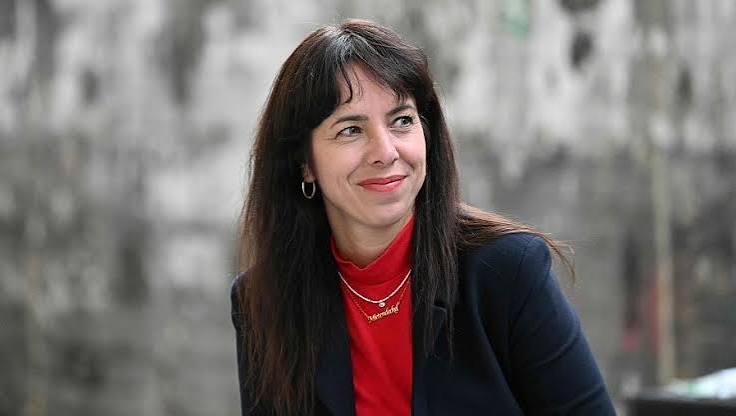
Elif Eralp, a Turkish-German candidate representing *Die Linke* (The Left), won the election. Until a few months ago, she was relatively unknown; the daughter of Turkish trade unionists, she was born in Munich and focused her legal career on defending human rights, especially those of migrants.
Elif Eralp is 45 years old and has served as a Left-wing lawmaker since 2021. Her campaign proposals included “expropriating housing from investment funds and creating a network of public canteens offering full lunches for three euros—known as *Kiezkantinen* (neighbourhood dining halls serving hot meals)” (*La Razón*, Spain, August 27, 2026).
Upon learning of her victory, Eralp pledged to move forward with the nationalization of housing companies and to “drive speculation out of Berlin.”
*Die Linke* is a centre-left alliance comprising former members of the Communist Party, Maoists, Trotskyist groups, and independents. In the national legislative elections of February 2025, it secured 8.5% of the vote, obtaining a significant parliamentary group of 64 deputies. By then, Die Linke had already achieved 19.9% in Berlin.
Notably, the party garnered 25% of the youth vote—specifically winning a majority among young women who reject the far-right’s attacks on their rights and those of sexual minorities. Die Linke also enjoyed support from young people facing repression for their solidarity with Palestine.
In this election, that share increased: 45% of the votes Die Linke received came from young people aged 16 to 34—nearly double the figure from the previous year.
The Rise of the Neo-Nazi Far-Right
The electoral advance of the German far-right reflects—much like the cases of Trump, Meloni, Le Pen, or Milei, Kast, and de la Espriella in Latin America—a misguided protest votes by a segment of the working class fed up with the traditional capitalist parties that have previously held power and driven the country into social crisis and a decline in living standards for millions. In Germany’s case, specifically, this represents a neo-Nazi manifestation of the far-right. It is gaining a majority of votes in East Germany—comprising the territories of the former German Democratic Republic (GDR)—governed under Stalinism from 1945 to 1989; has remained among the “poor states.”
The authorities never fulfilled the promises of “social equality” with West Germans made at the time of reunification—following the fall of the Berlin Wall.
Millions of people, understandably loathing Stalinism, believed capitalism would bring them prosperity; instead, the opposite occurred. Within just four years, authorities privatised all state-owned enterprises and caused a loss of 70% of jobs. Entire regions plunged into economic decline (see *Germany: The Significance of the Far Right’s First Victory* by Miguel Sorans—a leader of *Socialist Left -IS* [Argentina] and the IWU-FI—dated September 11, 2026, at uit-ci.org).
The crisis of German capitalism lies behind the political crisis
Faced with economic crisis, successive German governments—whether liberal-capitalist or social-democratic—have responded with policies involving social spending cuts and a decline in the masses’ standard of living. This explains the depth of the growing disillusionment with traditional bourgeois parties and leaders, as well as the electoral rise of the far right.
Germany’s economy is in decline and has been in recession since 2023. Volkswagen, for instance—an iconic company of German capitalism—announced that 100,000 jobs could disappear by 2030.
The working class and youth face cuts to social services, more labour market flexibility, and a growing military budget. Working people and youth must unite in the streets under new union and political leadership to defeat austerity and the far right.