By Adolfo Santos, a leader of Socialist Left/FITU, Argentina
27 October 2026. Bolstered by a massive popular mobilisation, Lula defeated Bolsonaro. The collapse of the far-right was so profound that—despite the millions of votes he received—Flávio [Bolsonaro], facing accusations of money laundering and other crimes, fled the country to avoid imprisonment alongside his father. Bolsonaro’s defeat is also a defeat for the likes of Trump and Milei.
In a historic comeback, Luiz Inácio Lula da Silva (PT) won the runoff election with 51.79% of the vote against Flávio Bolsonaro (PL), who received 48.21%. It was no miracle. A powerful popular mobilisation made what had seemed practically impossible a reality by taking it upon itself to defeat the Bolsonarista far-right. Lula himself acknowledged this at the Workers’ Party (PT) headquarters once they confirmed the victory; Bolsonaro’s defeat is also a defeat for those who envisioned painting our continent in the colours of the far-right. It was a rejection of Milei’s “chainsaws,” Bolsonaro’s “shears,” and the austerity measures pushed by Trump and the IMF.
The campaign underwent a dramatic shift. The runoff took on a different dynamic once broad sectors of the working class and the youth grasped the grave danger that a victory for the Bolsonaros would represent. Broad sectors aligned themselves like a veritable army to defeat any chance of victory for a corrupt candidate—one under investigation for money laundering—who represented the continuation of a dictatorship, the denial of environmental and climate issues, the deforestation of the Amazon, the threat to roll back reductions in the workday, the interests of murderous paramilitary militias, an agenda hostile to the rights of women and youth, and direct service to North American interests.
This was the driving force that mobilised millions: the fear of another far-right government under the Bolsonaros, rather than satisfaction with the Lula-Alckmin administration. It is no coincidence that, in the first round, many disillusioned working-class sectors stayed home, allowing for a partial victory for the far-right. But the response was spectacular. It began with the youth—the first to grasp the dangers—who took to the streets in cities across the country, inspiring millions of others to join them. This mobilisation helped secure an additional 10 million votes, reversing the unfavourable outcome of the first round and achieving an 80% voter turnout—one of the highest in recent memory. “Lula”—and the “L” gesture formed by the thumb and index finger—became the rallying cry for voters opposing the right, consolidating support in the North and Northeast while significantly increasing it in the central and southern regions of the country.
From a crushing defeat to flight
In major cities—such as São Paulo (SP), Rio de Janeiro (RJ), Salvador (BA), Fortaleza (CE), Recife (PE), Belo Horizonte (MG), and Brasília (DF)—the number of votes for the PT (Workers’ Party) increased significantly. Between 4 October and 25 October, the vote shifted toward Lula in virtually every municipality. In the first round, Lula had won in 2,663 municipalities, compared to 2,906 for Jair Bolsonaro. In the second round, out of 5,569 Brazilian municipalities, the Workers’ Party (PT) candidate prevailed in 2,875, compared to 2,695 for Flávio—an increase of 212 municipalities over the first round. It was in these state capitals and many of these municipalities that the largest mobilisations took place; one such event—the campaign-closing rally on Saturday the 24th on Avenida Paulista—became the largest demonstration in the history of that city, drawing 1.5 million people.
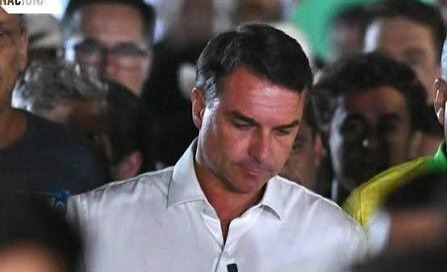
This crushing defeat sent the corrupt far-right candidate, Flávio Bolsonaro, into a panic, prompting him to flee Brazil for the United States with the assistance of Trump and Marco Rubio. Seeing his plans thwarted—which included securing amnesty for his father (imprisoned for his role in a coup attempt) and his brother (who self-exiled in the U.S. to evade prosecution and a conviction for obstructing justice)—and facing the loss of his own parliamentary immunity at the end of the year, he packed his bags and fled the country with his family. He is by no means a “politically persecuted person.” Flávio Bolsonaro faces accusations of money laundering, illicit ties to sports betting, foreign financing, and social media manipulation, as well as charges related to criminal organisation, embezzlement, and the hiring of “ghost employees”—individuals who collected salaries for government jobs they never performed, with a portion of those wages being siphoned off by him. It is a toxic cocktail typical of a corrupt, pro-establishment politician—a reality that the popular masses clearly understood, leading them to block the election of this sinister figure.
Maintaining mobilisation on the streets
Lula’s victory was significant in that it defeated the far-right Bolsonarista movement and provided a response to regional agendas centred on austerity and the surrender of national sovereignty. However, the first-round results also serve as a message to the Workers’ Party (PT) government, which has failed to implement structural changes in an economy that remains at the service of the financial system, agribusiness, major corporate interests, and multinational firms. It is essential to maintain mobilisation in the streets to continue the struggle against the ongoing “class-conciliation” politics of the Lula-Alckmin administration—a government that serves the interests of the elite. Thus far, Lula has offered the youth—a key force behind his electoral comeback—the “Pé-de-Meia” program (a financial aid initiative for students). While welcome, it is insufficient. To reduce social inequality, it is necessary to redirect the flow of wealth, suspend debt payments, and tax the vast fortunes that abound in Brazil.
The needs are immense in a country that boasts the world’s eighth-largest economy. This reality stands in stark contrast to the limited number of university spots, low wages for public sector workers—including those in education and healthcare—and pension levels that are on par with, or even worse than, those seen under the Milei administration in Argentina. Environmental issues remain far from resolved, and deforestation in the Amazon continues. Indigenous peoples are fighting for their land rights against the encroachment of agribusiness, while the state’s debt to women—starting with the right to abortion—remains unaddressed. Access to housing is a chronic problem, and promises of “first jobs” for young people never materialise, driving large segments of the youth into the arms of drug trafficking networks.
Lula promises solutions through a “professional” cabinet—though it remains unclear what that actually entails. So far, he has governed alongside the upper bourgeoisie and allied with pro-establishment politicians, including his vice president, Geraldo Alckmin—the former governor of São Paulo, who also has ties to Opus Dei. For this reason, the Socialist Workers’ Current (CST)—the Brazilian section of the IWU-FI—presented candidates in the first round alongside the slates of the PSTU, which ran its own presidential candidate. In the second round, faced with the danger posed by a potential Bolsonaro victory, the CST threw itself fully into street mobilisations alongside millions of fellow workers, calling for a critical vote for Lula—without this implying any political support for a Workers’ Party (PT) government. We know that the fundamental solution for the working people of Brazil is to achieve a government of the workers themselves. Now that the election has concluded, we will remain in the streets alongside those fighting against social inequality, for better wages and pensions, for the right to land and housing, and in defense of the environment, as well as the rights of women and youth. Because only struggle changes life.